
The Tan-Ju Experience
By Chandrika
Creating Friendships That Last: What Makes Tan-Ju Different
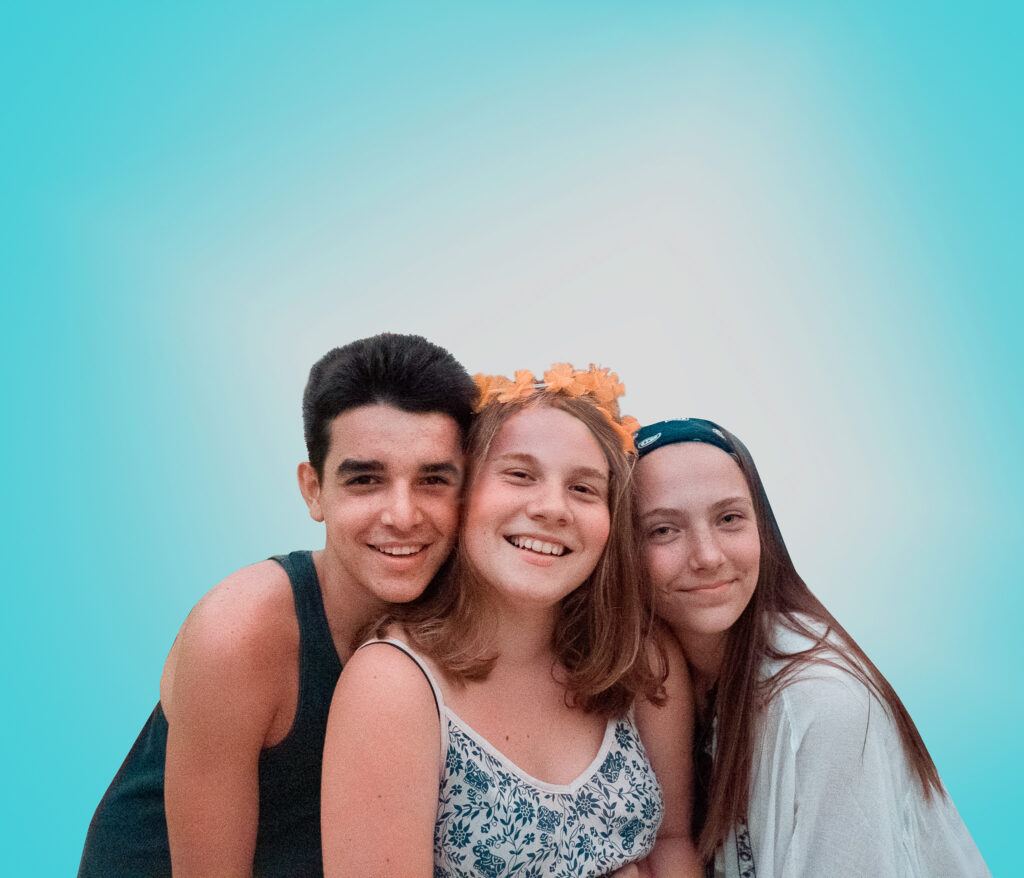
Over the past 36 years, I have watched thousands of teenagers walk through the doors of Tan-Ju feeling unsure, shy, or disconnected—and leave a month later transformed, confident, and connected to a community of friends who truly see them.
Tan-Ju is not a typical summer camp. It is a rite of passage, a community, and a way of learning to relate that many participants carry with them for the rest of their lives.
When Veeresh, the founder of Humaniversity, first asked me to work with teenagers back in 1990, I hesitated. I wanted to work with adults. But what I discovered in those first summers changed everything. Working with young people at this pivotal age—when they are forming their sense of self, learning how to relate, and navigating the intensity of adolescence—is some of the most rewarding work I have ever done.
Thirty-six years later, I am still here, still opening my heart to each new group of Tan-Jus who arrive each summer.
Why Teenagers Need Tan-Ju
Adolescence is hard. Hormones surge. Emotions feel overwhelming and confusing. Social pressures intensify. Many teenagers feel misunderstood, alone, or stuck in patterns of reaction and rebellion that they don’t know how to change.
School teaches math, science, and history. But where do teenagers learn to understand their emotions? Where do they learn to communicate authentically, to ask for what they need, to form friendships based on mutual care rather than performance or popularity?
For most young people, these skills are never explicitly taught. They are expected to figure it out on their own—often while navigating bullying, peer pressure, family conflict, and their own inner confusion.
Tan-Ju offers something different: a supported space where teenagers can learn about themselves, practice relating authentically, and discover that they are worthy of love and acceptance exactly as they are.
The Foundation: Emotional Awareness
At the heart of Tan-Ju is emotional awareness. We don’t teach teenagers to suppress their feelings or to “stay positive.” We teach them to recognize what they’re feeling, to understand what emotion is present in their body, and to express it in ways that create connection rather than harm.
In the first week, we explore the four basic emotions: joy, sadness, anger, and fear. Most teenagers have never had permission to feel all of these fully, let alone express them. Anger is labeled “bad.” Sadness is seen as weakness. Fear is something to hide.
But when we avoid or suppress emotions, they don’t disappear. They get stuck. They come out sideways—in reactivity, withdrawal, anxiety, or numbness.
Through simple, playful exercises, Tan-Jus begin to access these emotions in safe ways. They learn that anger can be expressed powerfully without aggression. That sadness can be released without being overwhelming. That fear can be acknowledged without shame.
As they become more aware of what’s happening inside, they gain the ability to communicate it. Instead of reacting or shutting down, they can say: “I feel scared right now,” or “I’m angry because I need to be heard.”
This awareness is life-changing. It gives teenagers agency over their inner world and their relationships.
Learning to Relate: From Reaction to Connection
One of the most beautiful aspects of Tan-Ju is watching teenagers learn to relate to each other with honesty and care.
In the beginning, many arrive with protective patterns. Some are loud and defensive. Others are quiet and withdrawn. Some compare themselves constantly to others. Some have learned to please and perform.
These patterns are understandable—they developed as ways of coping with a world that often feels unsafe or judgmental. But they also create distance and loneliness.
Through Tan-Ju’s emphasis on acceptance and clear communication, these patterns begin to soften. Teenagers experience, often for the first time, what it’s like to be accepted for who they are—not for how they look, what they achieve, or who they pretend to be.
When someone is truly seen and accepted, they relax. The need to perform falls away. Authentic connection becomes possible.
We also teach practical communication tools. How to ask for what you want. How to listen to what someone else needs. How to navigate conflict without attacking or withdrawing. How to express vulnerability without collapsing.
These skills support not only friendships within Tan-Ju but every relationship they will have for the rest of their lives.
The Peer-to-Peer Model: Teenagers Helping Teenagers
One of the unique aspects of Tan-Ju is the peer-to-peer learning model. Older Tan-Jus who have gone through the program return year after year to support newer participants.
This creates a culture of mentorship, responsibility, and mutual care. It also means that the guidance teenagers receive often comes from someone just a few years older who has walked the same path and faced the same challenges.
There is something powerful about learning from a peer. It removes the dynamic of “adult telling teenager what to do” and replaces it with “I’ve been where you are, and here’s what helped me.”
Adults are present, of course. We guide the overall structure, hold the container, and step in when deeper support is needed. But the day-to-day relating, problem-solving, and encouragement comes primarily from the teenagers themselves.
This builds confidence, leadership, and a sense of ownership over the community. Tan-Jus are not passive recipients of a program—they are active co-creators of the experience.
The Power of Performance
In the third week, the group comes together to create a performance or show that they present to the Humaniversity community and invited guests.
Many teenagers believe they can’t perform. They think they can’t dance, can’t remember choreography, can’t express themselves on stage. These beliefs often come from comparison, past criticism, or simply never having had the chance to try in a supportive environment.
But when we work together to create a show, something magical happens.
We build the script together, incorporating everyone’s strengths and interests. We teach choreography with playfulness and encouragement. We make space for individual expression within the collective creation.
And we do it all in a single week.
By the time they step on stage, every Tan-Ju shines. They discover that they can follow choreography, that they can express themselves publicly, that they can be a star in their own way.
The performance isn’t about perfection. It’s about teamwork, joy, and the experience of being celebrated for showing up fully.
Many participants say this week is one of the most transformative. It breaks through the belief that they’re “not good enough” and replaces it with the embodied experience of their own capability and worth.
Celebrating Connection
The fourth week is all about celebration. By this point, deep friendships have formed. The group has been through emotional work, creative collaboration, and countless hours of simply being together.
We celebrate with parties, outings, cooking together, and sharing reflections. We honor what has been created and acknowledge the bonds that will continue beyond the program.
The motto “Once a Tan-Ju, always a Tan-Ju” is not just words. These friendships are real. Many participants stay in touch for years—meeting up in different cities, supporting each other through life transitions, and returning to Tan-Ju summer after summer.
When it’s time to say goodbye, there are always tears. These tears are not about sadness alone—they are about love. They reflect the depth of connection that has been created in just four weeks.
The Phone Question
In recent years, we’ve had to navigate the challenge of smartphones and social media. In the beginning, we didn’t restrict phone use at all. But we noticed that teenagers were spending hours gaming together in the same room, physically present but emotionally disconnected.
We brought this to their attention and asked: “What do you want? Because we believe it’s important that you connect heart to heart. Later, when you’re home, you can return to gaming. But while you’re here, you have a different opportunity.”
The teenagers themselves decided to limit Wi-Fi access to one hour per day and allow phones only during breaks. This decision came from them, which is why it’s accepted and respected.
What we’ve witnessed over the years is beautiful: as authentic connection deepens, interest in phones naturally decreases. The pull of real relating becomes stronger than the pull of digital distraction.
What Parents Notice
Parents often tell us that their teenager comes home a different person.
They notice increased self-confidence. Clearer communication. Greater emotional maturity. More clarity about what they want in life.
Some parents say: “My child used to hide in their room. Now they talk to me openly.”
Others say: “They finally know what they want to do with their future.”
Still others say: “They’re so much more grounded and less reactive.”
The transformation isn’t about becoming someone else. It’s about coming home to oneself—and that change ripples out into every relationship and area of life.
For the Shy, the Bullied, the Unsure
If there’s one thing I want teenagers to know, it’s this: Tan-Ju is a place where you will be accepted exactly as you are.
If you’re shy, you don’t need to become loud. If you’re uncertain, you don’t need to have it all figured out. If you’ve been bullied or made to feel like you’re not enough, you will find people here who see you differently.
Through emotional awareness, supportive relationships, and a culture of acceptance, you will discover your personal power. Not power over others, but power within yourself—the ability to express who you are, ask for what you need, and move through the world with confidence and clarity.
You will also discover that you’re not alone. There are others who understand, who care, and who are walking a similar path.
The Lasting Impact
The healing and growth that happens in Tan-Ju doesn’t end when the program does. It continues.
Participants carry the tools they’ve learned into their daily lives. They apply emotional awareness in school, at home, and in friendships. They use the communication skills to navigate conflicts and build deeper relationships. They return to the memory of being truly seen and accepted whenever they doubt themselves.
And they stay connected—not just to the friends they made, but to the community itself. As Veeresh said to each group of Tan-Jus:
“You go into the world. You do whatever you want to do. But remember, we will always be here. Whenever you need us, you are our kids. You can always come back to us, and we will help you further.”
That promise is real. Humaniversity remains a home base—a place to return to for support, reconnection, and continued growth.
An Invitation
If you’re a parent reading this and wondering whether Tan-Ju is right for your teenager, I encourage you to trust what you feel. If your child is struggling with confidence, connection, or clarity, this program offers something that school and traditional therapy often cannot: a lived experience of authentic relating, emotional awareness, and community support.
If you’re a teenager reading this, I want you to know: you are welcome here. You don’t need to be confident or outgoing. You don’t need to have it all together. You just need to be willing to show up.
Thirty-six years into this work, I still feel my heart open with each new group. I still witness the transformation that happens when teenagers are given space to be themselves, tools to understand their emotions, and a community that accepts them unconditionally.
Once a Tan-Ju, always a Tan-Ju. Friends forever.
That’s not just a motto. It’s a promise. And it’s one we’ve kept for over three decades.
Chandrika